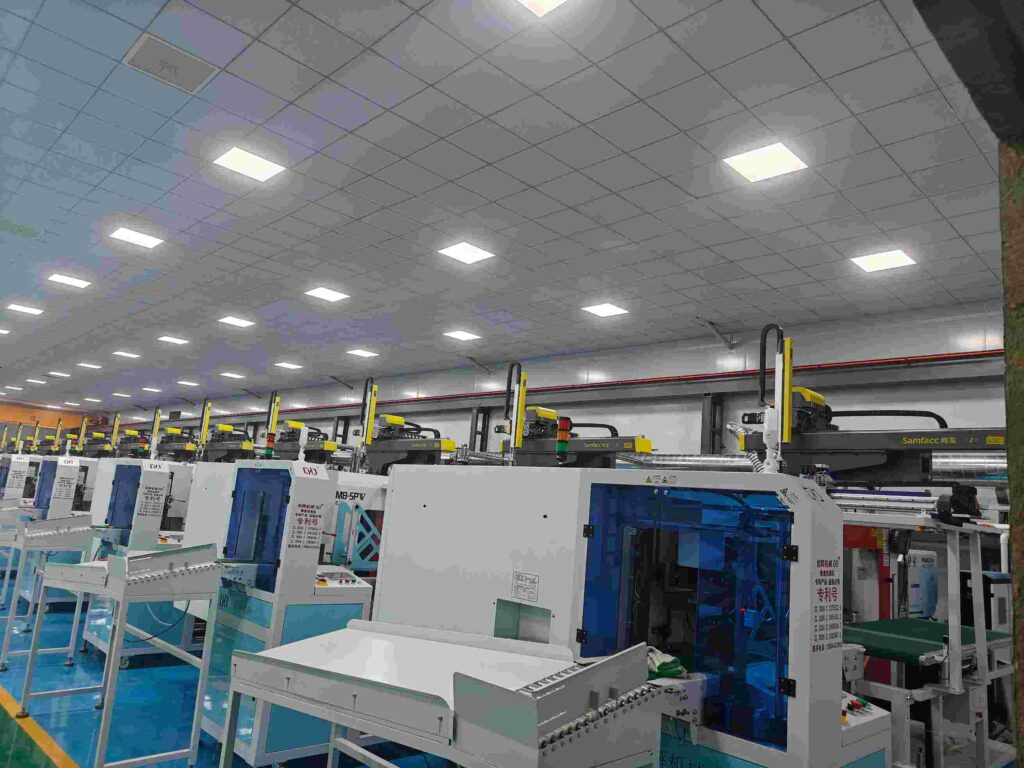
A servo robot is an automated machine that uses servo motors to control movement with high accuracy. These robots are widely used in factories, warehouses, assembly lines, packaging operations, and other industrial environments. They can perform repetitive tasks quickly while maintaining consistent movement.
Servo technology gives robots precise control over position, speed, and torque. This makes servo robots useful for applications that require accurate and repeatable movements.
Modern servo robots can work with sensors, programmable controllers, vision systems, and other automation equipment. Their flexibility allows manufacturers to use them for different production requirements.
What Is a Servo Robot?
A servo robot is a robotic system that uses servo motors and feedback mechanisms to control its movement. Unlike basic motors that may simply rotate at a set speed, servo motors can be controlled according to specific movement requirements.
A servo robot can move along one or more axes. Its controller sends commands to the motors while feedback devices provide information about the robot’s actual position.
This closed-loop control allows the robot to make accurate movements. It is particularly useful for industrial tasks that require consistent positioning.
How Does a Servo Robot Work?
The operation of a servo robot involves several connected systems. A controller sends movement commands based on the programmed task.
The servo drive converts these commands into electrical signals that control the motor. An encoder or feedback device reports information about the motor’s position and movement.
The controller compares the desired movement with the actual position. It can then make adjustments to improve accuracy.
This process happens continuously during operation. As a result, the robot can perform precise movements repeatedly.
Main Components of a Servo Robot
Several components work together in a servo robotic system. The servo motor provides mechanical movement.
The servo drive controls the motor’s electrical operation. The robot controller manages programmed movements and coordinates different axes.
Encoders provide feedback about position and speed. Mechanical components such as gears, joints, arms, and end-effectors allow the robot to interact with objects.
Sensors can also be added for safety and process control. Together, these components create a complete automated system.
Types of Servo Robots
There are several types of robots that can use servo technology. Articulated robots have multiple rotating joints and are common in manufacturing.
SCARA robots are designed for fast horizontal movements and are often used for assembly and material handling.
Cartesian robots move along linear axes. They can provide straightforward positioning for applications with defined movement paths.
Delta robots are designed for fast pick-and-place operations. The appropriate type depends on the speed, payload, workspace, and accuracy required.
Servo Motors and Motion Control
Servo motors are central to servo robot operation. They provide controlled movement based on commands from the robot controller.
Servo systems can control important motion characteristics, including position, speed, and torque. This makes them suitable for tasks that require carefully controlled movement.
Advanced motion controllers can coordinate multiple servo motors at the same time. This allows a robot to perform complex movements while maintaining synchronization.
Servo Robot Accuracy and Repeatability
Accuracy and repeatability are important reasons manufacturers use servo robots. Accuracy describes how closely a robot reaches the intended position.
Repeatability describes how consistently the robot returns to the same position during repeated operations.
Both characteristics matter in applications such as assembly, machine tending, inspection, and packaging. The actual performance depends on the robot design, controller, calibration, payload, and operating conditions.
Benefits of Using Servo Robots
Servo robots can provide several benefits in industrial environments. One major advantage is consistent movement.
Robots can repeat programmed tasks for long periods without becoming tired. They can also operate at high speeds while maintaining controlled motion.
Automation can reduce manual handling for repetitive processes. It may also help manufacturers improve production consistency.
Servo robots can be reprogrammed for different tasks. This flexibility can be useful when production requirements change.
Servo Robots in Manufacturing
Manufacturing is one of the largest application areas for robotic automation. Servo robots can move components between machines, perform assembly operations, handle materials, and support production processes.
They can also work alongside other automated systems. For example, a robot may receive instructions from a programmable logic controller and transfer products between production stations.
Manufacturers can select different robot sizes and configurations according to their production needs.
Servo Robots for Pick and Place
Pick-and-place applications involve moving objects from one location to another. Servo robots are well suited to these operations because they can control position and movement precisely.
The robot can use an appropriate gripper or vacuum tool to pick up an item. It then moves the item to a programmed destination.
These systems are common in food packaging, electronics, consumer goods, and manufacturing environments.
Servo Robots in Packaging
Packaging operations often require fast and consistent movement. A servo robot can place products into containers, sort items, load packages, or move products between production stages.
Servo control allows the robot to coordinate speed and position. This is useful when products move continuously on conveyors.
Robotic packaging systems can also be integrated with sensors and vision equipment for automated product identification.
Servo Robots and Machine Tending
Machine tending involves loading and unloading machines such as CNC equipment. A servo robot can transfer raw materials into a machine and remove finished parts.
Automation can help reduce manual handling and maintain consistent production cycles.
The robot can also communicate with the machine controller. This allows the two systems to coordinate their operations.
Servo Robots With Vision Systems
Vision technology can make robotic systems more flexible. Cameras can capture images of products and provide information to the robot controller.
The robot can use this information to identify an object’s position, orientation, size, or other characteristics.
Vision-guided servo robots are useful for sorting, inspection, assembly, and pick-and-place applications where objects may not always appear in exactly the same position.
Energy Efficiency and Operating Costs
Operating costs are important when evaluating robotic automation. Servo systems can provide controlled motion and may reduce unnecessary mechanical movement.
Energy use depends on robot size, workload, operating speed, duty cycle, and system design.
Manufacturers should consider the complete cost of ownership. This can include equipment, installation, programming, maintenance, energy consumption, spare parts, and training.
How to Choose a Servo Robot
Start by identifying the task the robot needs to perform. Consider payload, reach, speed, number of axes, accuracy, workspace, and cycle time.
The end-effector is also important. Different tasks may require grippers, vacuum tools, welding equipment, or specialized tooling.
Consider controller capabilities and compatibility with existing factory equipment. Safety features, programming support, maintenance services, and spare parts should also be evaluated.
Servo Robot Maintenance
Regular maintenance helps keep robotic equipment operating reliably. Maintenance can include checking motors, cables, gear systems, joints, sensors, and controllers.
Lubrication may be required for certain mechanical components. Encoders and other feedback devices should also be checked when performance problems occur.
Preventive maintenance can help identify wear before it causes unexpected downtime. Manufacturers should follow the robot manufacturer’s maintenance recommendations.
Common Challenges With Servo Robots
Servo robots can require significant initial investment. Installation and programming may also require skilled technicians.
Poorly selected equipment can lead to performance problems. Incorrect payload calculations, unsuitable tooling, or inadequate workspace planning can affect robot operation.
Training is another important consideration. Operators and maintenance personnel need to understand programming, safety procedures, and basic troubleshooting.
Frequently Asked Questions
What is a servo robot used for?
Servo robots are used for tasks such as assembly, pick and place, packaging, machine tending, sorting, inspection, and material handling.
Why do robots use servo motors?
Servo motors provide controlled movement and feedback. This allows robots to manage position, speed, and torque accurately.
Are servo robots programmable?
Yes. Most industrial servo robots can be programmed for specific movements and production tasks.
Can servo robots work with cameras?
Yes. Vision systems can help robots identify objects and determine their position before performing a task.
Do servo robots require maintenance?
Yes. Regular inspection and preventive maintenance help maintain performance and reduce unexpected downtime.
How do I select a servo robot?
Consider payload, reach, speed, accuracy, cycle time, workspace, tooling, controller compatibility, safety requirements, and support services.
Final Thoughts
A servo robot combines robotic automation with precise servo motion control. Its ability to manage position, speed, and torque makes it useful for many industrial applications.
From manufacturing and packaging to machine tending and automated inspection, servo robots can perform repetitive tasks with consistent movement. The right system depends on the application, payload, workspace, speed, accuracy, and integration requirements.
With proper planning, programming, safety procedures, and maintenance, servo robotic systems can become an important part of an efficient automated production environment.