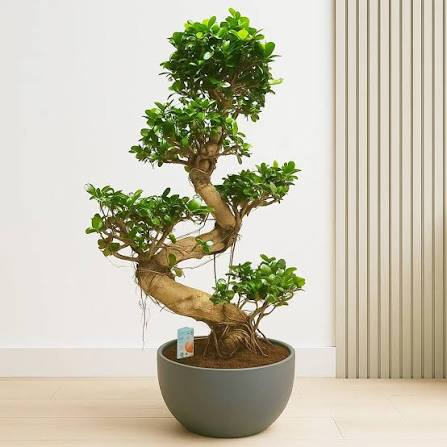
The S shape Ficus bonsai stands as one of the most recognizable and widely admired forms in the bonsai community. Known scientifically as Ficus retusa or Ficus microcarpa, this tropical specimen combines artistic trunk curves with dense, vibrant green foliage. Its striking appearance mimics the sweeping lines found in aged trees growing naturally on windy mountainsides or along riverbanks. Whether you are an experienced grower expanding a collection or a beginner stepping into living art, the S-shape Ficus offers an accessible yet deeply rewarding journey.
Understanding the S-Shape Design Aesthetic
The signature S-curve is derived from the traditional Moyogi or informal upright style in classical bonsai practice. Instead of growing completely straight, the trunk gently sways back and forth, creating a flowing rhythm from the roots up to the apex.
This design is structured to balance visual weight across the container:
- The Root Base: Strong surface roots anchor the tree, establishing a sense of maturity and stability.
- The Lower Curve: The trunk bends away from the center to create dynamism, with branches usually placed on the outer edge of each curve.
- The Upper Curve: The trunk sways back toward the central vertical axis, ensuring the apex centers directly over the base of the plant.
- Foliage Pads: Leaves are pruned into distinct cloud-like layers, allowing light to filter through every branch level.
Ideal Light, Temperature, and Placement Needs
Ficus trees originate from warm, tropical regions, meaning environmental stability is essential to keep them healthy.
- Light Requirements: Place your S-shape Ficus where it receives bright, indirect sunlight for at least 6 hours daily. A south- or west-facing window works best indoors. Supplemental LED grow lights help maintain healthy foliage during darker winter months.
- Temperature Range: Keep the tree in environments between 60°F and 75°F (15°C to 24°C). Avoid exposing the tree to sudden cold drafts or temperatures below 55°F (13°C), as extreme cold triggers leaf drop.
- Humidity Levels: Ficus trees thrive in moderate to high humidity. Placing a water-filled pebble tray beneath the pot or running a small room humidifier keeps the foliage lush.
Watering Strategies and Soil Requirements
Improper watering is the leading cause of health issues in bonsai cultivation. Ficus species prefer consistent moisture without waterlogged soil.
- When to Water: Check the top layer of soil daily. Water thoroughly when the upper half-inch of soil feels dry to the touch. Continue pouring until excess water drains freely from the pot’s drainage holes.
- Watering Technique: Use a gentle watering can or a bonsai soil soaking method to prevent washing away topsoil. Never let the pot sit in standing drainage water.
- Soil Composition: Use a well-draining bonsai soil mix. A mixture consisting of akadama, pumice, and lava rock in equal parts provides optimal aeration and moisture retention while allowing excess water to pass through freely.
Pruning, Wiring, and Shaping Techniques
Maintaining the iconic S-shape requires regular attention to branching patterns and growth velocity.
- Maintenance Pruning: Trim back new growth regularly during the active spring and summer seasons. A common guideline is to let a branch grow 6 to 8 leaves, then trim it back to 2 or 3 leaves to encourage dense ramification.
- Structural Pruning: Remove branches that grow straight down, cross over the trunk, or grow directly from the inside of a curve. Always focus on maintaining branches on the outside bends of the S-curve.
- Wiring Guidelines: Ficus wood is pliable when young. Use anodized aluminum wire to gently adjust minor branch angles. Wrap the wire at a 45-degree angle along the branch, bending slowly into position. Check the wire monthly and remove it before it bites into the growing bark.
Fertilization and Seasonal Care Routines
Because bonsai live in small pots with limited soil, regular nutrient replenishment is mandatory.
- Spring and Summer: Feed the tree every two weeks using a balanced liquid organic fertilizer or balanced NPK ratio (such as 10-10-10). Active growth requires steady nitrogen, phosphorus, and potassium.
- Fall and Winter: Reduce fertilization frequency to once every 4 to 6 weeks as growth naturally slows down.
- Repotting Needs: Repot your S-shape Ficus every 2 to 3 years during late spring. Gently trim up to 20% of the outer root mass to make room for fresh soil while preserving the primary anchor roots.