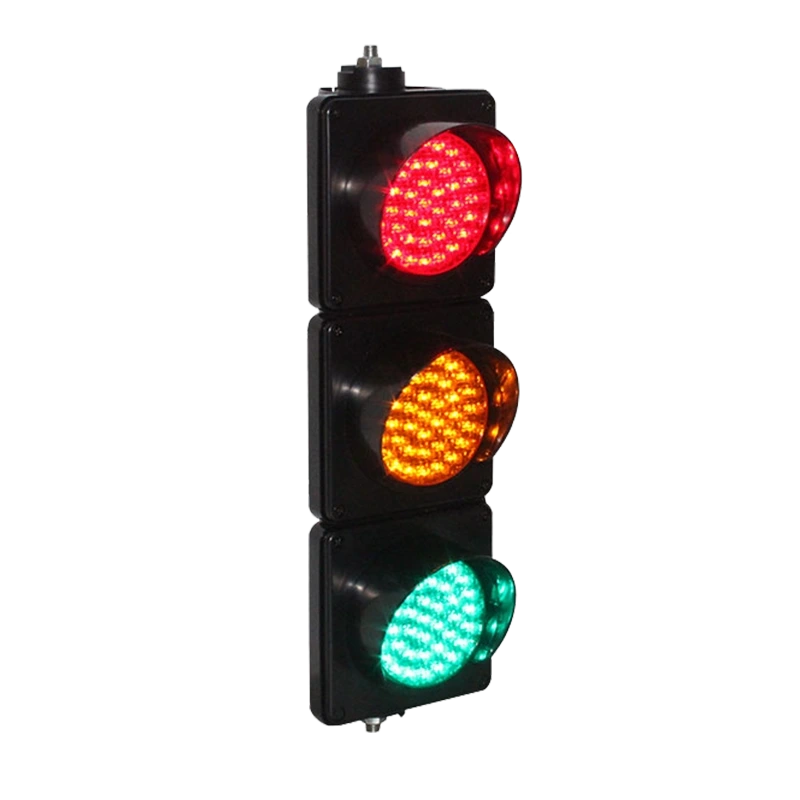
A 100 mm traffic light three aspect is a compact and highly visible traffic signal designed to control the movement of vehicles and pedestrians at roads, junctions, crossings, parking areas, industrial sites, and private premises. The term “three aspect” generally refers to the three standard signal indications: red, yellow, and green. With a 100 mm lens or signal diameter, this type of traffic light is particularly suitable for locations where space is limited but clear signal visibility is still required.
Traffic lights are an important part of modern road safety systems. They provide clear instructions to road users and help organize traffic flow at intersections. A properly designed three-aspect signal can reduce confusion, improve traffic movement, and provide a predictable sequence for drivers.
What Is a 100 mm Traffic Light Three Aspect?
A 100 mm traffic light three aspect is a traffic signal unit containing three individual light sections. These sections normally display red, yellow, and green indications. Each aspect is activated according to a predetermined traffic-control sequence.
The 100 mm specification generally indicates the nominal diameter of the signal lens or optical module. Compared with larger traffic signals, a 100 mm unit has a relatively compact design. This makes it useful for applications where a smaller signal head is appropriate.
The signal may use traditional incandescent bulbs or modern LED technology. LED versions are increasingly preferred because they offer strong illumination, lower energy consumption, and a longer operational life.
Main Features of a Three Aspect Traffic Light
A typical 100 mm three-aspect traffic light includes several important components:
- Three signal aspects
- Red, yellow, and green indicators
- Weather-resistant housing
- Transparent or colored lenses
- Electrical terminals and wiring
- Mounting brackets or fixing points
- Internal reflectors or LED modules
- Protective front covers
The exact construction can vary depending on the manufacturer and intended application. Some models are manufactured specifically for outdoor road environments, while others are designed for industrial facilities, warehouses, private roads, or parking systems.
Red, Yellow, and Green Signal Functions
The three colors have distinct functions in a conventional traffic-control system.
Red tells road users to stop and remain stationary where required.
Yellow, also called amber in some countries, normally warns that the signal is changing and that drivers should prepare to stop where it is safe and appropriate to do so.
Green indicates that movement is permitted when the road or junction is clear and other applicable traffic rules are followed.
The sequence and timing of these indications are normally controlled by a traffic signal controller.
Why 100 mm Size Is Important
The physical size of a traffic signal affects its visibility, installation requirements, and suitability for a particular location. A 100 mm signal offers a relatively compact solution for applications that do not require a larger signal head.
This size can be useful for:
- Small road intersections
- Pedestrian crossings
- Private parking facilities
- Industrial premises
- Factory entrances and exits
- Railway or transport-related facilities
- Internal roads
- Automated gates and access-control systems
Before selecting a signal, however, users should check local traffic regulations and technical specifications to determine whether a 100 mm signal is suitable for the intended application.
LED Technology in 100 mm Traffic Signals
Modern traffic lights commonly use LED technology. An LED traffic signal generates light through multiple light-emitting diodes rather than relying on a conventional filament bulb.
One major benefit is energy efficiency. LEDs generally consume less electrical power than traditional lamps while providing strong and uniform illumination. They can also have a long service life when properly designed and operated.
Another advantage is improved reliability. A well-designed LED module can contain numerous individual LEDs, helping maintain illumination even if an individual LED fails.
LED technology also allows manufacturers to create compact optical systems suitable for small signal sizes such as 100 mm.
Visibility and Optical Performance
Visibility is one of the most important characteristics of a traffic signal. A signal should provide a clear indication under the expected environmental conditions.
Optical performance can be affected by several factors, including:
- Lens design
- LED intensity
- Viewing angle
- Ambient sunlight
- Signal position
- Housing design
- Weather conditions
- Cleanliness of the lens
For outdoor installations, the signal should be positioned so that drivers or pedestrians can easily identify the active indication from the required viewing direction.
Construction and Weather Protection
Traffic signals installed outdoors need protection from rain, dust, sunlight, temperature changes, and other environmental conditions. The housing is therefore an important part of the product.
A quality 100 mm traffic light may use a durable polymer or metal housing with a protective coating. Seals and gaskets can help prevent moisture from entering the optical and electrical compartments.
When selecting a product for outdoor use, it is useful to check its stated environmental protection rating, operating temperature range, UV resistance, and mechanical durability.
Installation of a 100 mm Traffic Light
Installation requirements depend on the application. The signal can typically be attached to a suitable pole, wall, mounting structure, or equipment frame.
The installer should ensure that:
- The signal is securely mounted.
- The three aspects are correctly oriented.
- Wiring is protected from mechanical damage.
- The electrical supply matches the manufacturer’s specification.
- The signal is clearly visible.
- Maintenance access is available.
- Installation complies with applicable regulations.
Electrical installation should be performed by a suitably qualified person, particularly for systems connected to mains electricity.
Traffic Signal Control Systems
A three-aspect signal normally works as part of a larger control system. The traffic controller determines when each aspect should illuminate.
For example, a simple sequence may operate as green, yellow, and red, with programmed timing between stages. More sophisticated systems can coordinate several traffic signals at an intersection.
Controllers may also receive information from vehicle detectors, pedestrian push buttons, timers, or other traffic-management equipment. This allows signal operation to respond to changing traffic conditions.
Applications of 100 mm Traffic Lights
The compact size of a 100 mm three-aspect signal makes it suitable for numerous controlled environments.
In parking facilities, traffic lights can control vehicle entry, exit, and movement through narrow lanes.
In factories and warehouses, signals can help separate vehicle and pedestrian movement or control access through loading areas.
At private entrances, they can be integrated with gates and access-control systems.
They may also be used in model traffic systems, educational equipment, automated machinery, and specialized transport installations, provided the product is appropriate for the application.
Advantages of a 100 mm Three Aspect Signal
A 100 mm three-aspect traffic light can provide several practical benefits.
Its compact dimensions make installation easier where space is restricted. The three-color arrangement provides familiar visual instructions. LED models can offer efficient operation and reduced maintenance requirements.
The simple structure also makes the system relatively straightforward to understand and integrate with an appropriate controller.
However, the suitability of any traffic signal depends on the environment, required viewing distance, regulatory requirements, and technical specifications.
Choosing the Right 100 mm Traffic Light
When purchasing a 100 mm traffic light three aspect, buyers should consider more than just the physical size.
Important specifications may include:
- Operating voltage
- Power consumption
- LED or bulb technology
- Lens diameter
- Viewing angle
- Housing material
- Environmental protection
- Operating temperature
- Mounting method
- Expected service life
- Electrical connection
- Applicable standards
The required specification should be determined before installation. For public roads, compliance with the relevant transportation authority’s standards is particularly important.
Maintenance and Inspection
Regular inspection helps maintain reliable signal operation. The lenses should be checked for dirt, cracks, discoloration, or physical damage. Electrical connections should also be inspected where appropriate.
For LED signals, unusual brightness differences or non-functioning sections can indicate a fault. Any damaged components should be replaced according to the manufacturer’s instructions.
Outdoor traffic lights should also be checked after severe weather or accidental impact.
Safety Considerations
Traffic signals are safety-critical devices when used for controlling real-world traffic. Incorrect wiring, poor positioning, inadequate visibility, or inappropriate timing can create confusion and increase risk.
For this reason, installation and commissioning should follow the relevant technical requirements. A traffic signal should never be installed in a public-road application solely because its physical dimensions appear suitable.
Conclusion
A 100 mm traffic light three aspect provides a compact method of presenting the three familiar traffic indications—red, yellow, and green. Its relatively small size makes it useful for selected road, parking, industrial, commercial, and access-control applications.
LED technology can provide efficient illumination, long operating life, and dependable performance, while a durable housing can protect the signal in demanding environments. When selecting a 100 mm three-aspect traffic light, users should carefully consider voltage, optical performance, environmental protection, mounting requirements, controller compatibility, and applicable regulations.
With the correct product specification, installation, and maintenance, a three-aspect traffic light can provide clear visual instructions and contribute to an organized and controlled traffic environment.