In any public, commercial, or industrial environment, maintaining exceptional standards of cleanliness is paramount. Whether managing a bustling corporate office, a high-end restaurant, a healthcare facility, an educational institution, or a manufacturing plant, hand hygiene serves as the primary line of defense against the spread of germs, bacteria, and illness. At the center of every effective facility handwashing strategy is a fixture that often gets overlooked until it fails: the commercial soap dispenser.
Investing in high-quality commercial soap dispensing systems is not merely a matter of furnishing a restroom. It is a strategic operational decision that impacts public health, facility maintenance costs, user satisfaction, and environmental sustainability. Unlike residential units designed for low-frequency use by a few family members, commercial units are built to withstand hundreds or even thousands of uses daily, enduring heavy wear and potential physical abuse while delivering a consistent, controlled dose of soap every time.
Understanding the mechanics, varieties, and key considerations behind selecting the right commercial soap dispensing system empowers facility managers, business owners, and architects to create safer, cleaner, and more efficient environments.
The Evolution and Importance of Modern Hand Hygiene Systems
Hand washing facilities have evolved dramatically over the past few decades. Gone are the days when public restrooms provided communal bar soaps, which quickly dissolved into messy, unsightly residue and served as potential cross-contamination surfaces. The transition to liquid and foam soap dispensers marked a major leap forward in sanitation.
Today, commercial soap dispensers form an integral part of comprehensive facility management protocols. By encouraging proper hand hygiene, businesses significantly reduce absenteeism caused by contagious illnesses such as influenza, norovirus, and common colds. In healthcare settings, advanced dispensing systems directly contribute to reducing hospital-acquired infections, saving lives and reducing medical liabilities. In food service operations, reliable hand cleaning infrastructure prevents foodborne illness outbreaks that can devastate a brand’s reputation overnight.
Beyond health benefits, modern commercial dispensers are engineered to lower overall operating costs through precise portion control, reduced waste, and minimized labor needed for frequent maintenance and refills.
Types of Commercial Soap Dispensers
Selecting the correct commercial soap dispenser requires an understanding of the different mechanisms and form factors available on the market today. Each type presents distinct advantages tailored to specific operational environments.
Manual push-button dispensers remain the most common and traditional option across many commercial facilities. Operated by physically pressing a lever or button, these systems are renowned for their reliability, durability, and cost-effectiveness. Because they operate without batteries or electronic components, they require minimal maintenance and eliminate the operational downtime associated with dead power sources. High-impact ABS plastic or stainless steel construction allows manual units to endure heavy usage in school restrooms, public parks, and industrial sites.
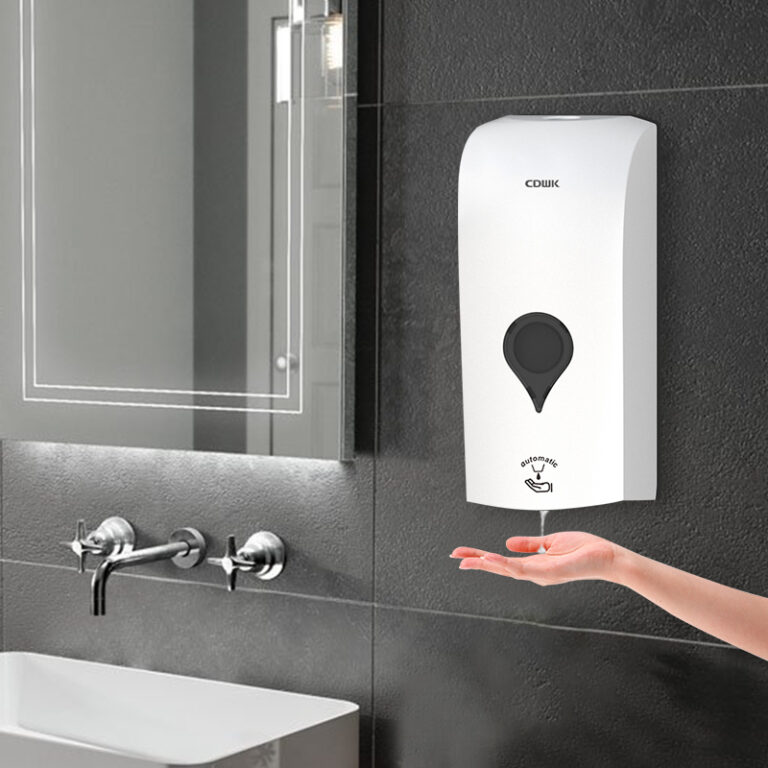
Automatic, sensor-operated dispensers represent the modern standard for touchless hygiene. Utilizing infrared sensor technology, these units detect a user’s hands beneath the nozzle and automatically deliver a predetermined volume of soap. By eliminating physical contact points, touchless dispensers drastically reduce cross-contamination risks, making them the preferred choice for healthcare facilities, laboratories, food processing facilities, and premium commercial offices. Furthermore, touchless options enhance the overall perception of clean and modern facility standards among visitors and employees.
Wall-mounted dispensers are designed to save counter space and maintain clean, uncluttered sink areas. They can be installed directly onto drywall, tile, or mirror surfaces using heavy-duty mounting hardware or industrial adhesives. Wall-mounted units are available in both manual and automatic variations and are widely utilized in standard commercial restrooms where space utilization and ease of cleaning are primary concerns.
Counter-mounted or deck-mounted dispensers offer a seamless, streamlined aesthetic by integrating directly into the sink vanity. The dispensing spout sits above the counter, while the soap reservoir remains hidden beneath the basin. Deck-mounted units are popular in upscale establishments such as luxury hotels, fine dining establishments, corporate headquarters, and airports. They offer a refined appearance while keeping soap reservoirs large enough to handle high visitor traffic.
Soap Format Considerations: Liquid vs. Foam
When choosing a commercial soap dispenser, facility managers must decide which soap formulation best suits their operational goals: traditional liquid soap or modern foam soap.
Liquid soap systems have been the industry standard for decades. Liquid formulations are versatile, widely available, and effective at removing heavy grease, oil, and grime. This makes liquid soap dispensers ideal for industrial settings, auto repair shops, commercial kitchens, and manufacturing facilities where heavy-duty cleaning power is required. However, liquid soap typically requires more water to rinse completely, and drippage from liquid nozzles can leave messy deposits on sink counters and floors if drip trays are not installed.
Foam soap systems have gained massive popularity in recent years due to their efficiency and user preference. Foam dispensers utilize a specialized pump mechanism that mixes liquid soap solution with air to create a rich, pre-lathered foam. Foam soap requires less water to lather and rinse, resulting in substantial water savings over time. Additionally, foam soap yields significantly more uses per refill cartridge compared to liquid soap, reducing product consumption by up to forty percent and extending the interval between routine maintenance refills.
Key Features to Look For in Commercial Soap Dispensing Systems
To ensure long-term performance, durability, and value, several essential features must be evaluated when selecting commercial soap dispensing solutions for any property.
Durability and Vandal Resistance are critical factors, particularly in high-traffic public areas such as stadiums, transit hubs, and educational institutions. Look for units manufactured from heavy-gauge grade 304 stainless steel or reinforced ABS plastics. Vandal-resistant features, such as key-locked enclosures and concealed mounting hardware, prevent tampering, theft, and intentional damage.
Capacity and Refill Mechanisms directly affect labor costs and maintenance schedules. Dispensers come in capacities ranging from 500 milliliters to over 2000 milliliters. Larger capacity units reduce the frequency of refills, freeing up cleaning staff for other tasks. Facilities can choose between closed cartridge systems and open bulk-fill systems. Cartridge systems offer maximum hygiene because each sealed unit includes a fresh nozzle, eliminating the risk of bacterial contamination inside the reservoir. Bulk-fill systems, on the other hand, allow maintenance teams to pour soap directly into a permanent tank, offering lower ongoing product costs.
Battery Life and Power Options are paramount when selecting automatic touchless dispensers. High-efficiency electronic units can deliver up to one hundred thousand cycles on a single set of standard batteries. Some commercial systems offer hardwired AC power connections or solar-assisted power cells that utilize ambient room lighting to extend battery performance indefinitely, minimizing environmental waste and labor costs associated with battery replacements.
Visual Indicators and Translucent Windows allow janitorial personnel to quickly assess soap levels without opening the dispenser housing. Sight glasses, clear reservoirs, or LED status indicators streamline routine inspections and prevent facilities from running out of soap during peak operating hours.
Universal Design and ADA Compliance ensure that facilities remain accessible to all users, including individuals with disabilities, seniors, and children. In the United States, Americans with Disabilities Act (ADA) guidelines mandate that commercial dispensers must be mountable at accessible heights, operable with one hand, and require less than five pounds of force to activate. Touchless automatic dispensers naturally align with universal accessibility standards.
Best Practices for Installation and Maintenance
Proper installation and routine maintenance are essential to prolonging the lifespan of commercial soap dispensers and preventing operational failures.
During installation, ensure dispensers are mounted at an optimal height—typically forty to forty-eight inches from the finished floor to the bottom of the unit, or at least two inches above the sink vanity line to avoid accidental activation of automatic sensors. Sensor units should not be placed directly above reflective chrome surfaces or in direct sunlight, as infrared glare can interfere with sensor performance.
Routine cleaning procedures should include wiping down exterior surfaces daily with non-abrasive, neutral disinfectants. For automatic models, keep sensor lenses clean and free of soap buildup or dust. Periodically flush reusable pumps and bulk reservoirs with warm water to prevent clogs caused by dried soap accumulation. Finally, establish a regular inspection schedule to monitor battery levels, seal integrity, and soap reserves before high-traffic events.
Investing in Long-Term Facility Health
Commercial soap dispensers are a fundamental component of modern facility infrastructure. By prioritizing quality, hygiene technology, and durability in your selection, you create a cleaner environment for occupants, streamline janitorial operations, and present a professional image that reflects your organization’s commitment to health and safety.