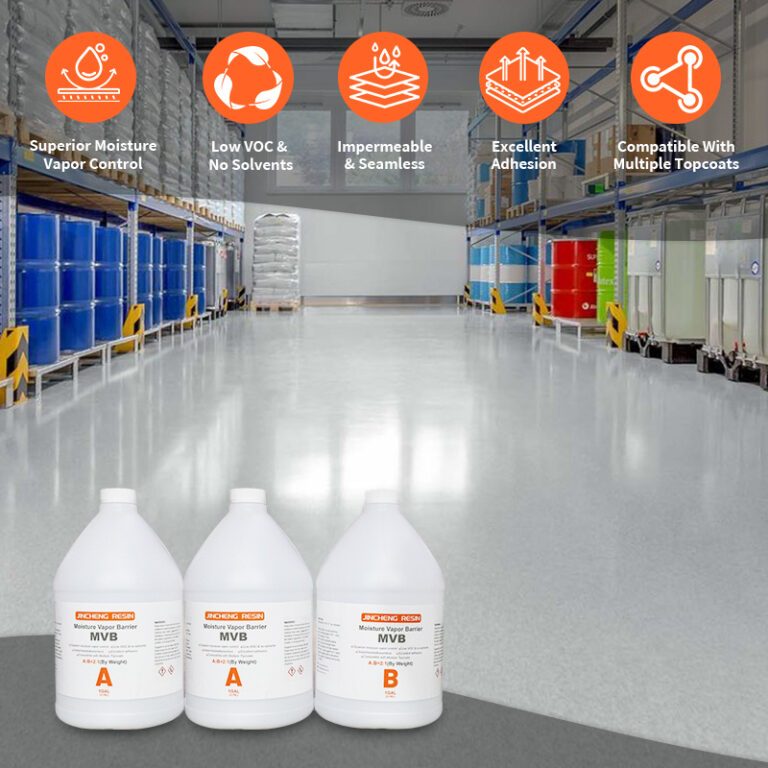
Concrete floors may look dry on the surface while still holding moisture underneath. This hidden moisture can create serious problems for flooring systems. It may cause bubbling, peeling, discoloration, or loss of adhesion.
A moisture vapor barrier epoxy system is designed to help manage moisture moving through concrete. It can provide a protective layer between the substrate and the flooring system. However, selecting the right product and preparing the concrete correctly are both important.
This guide explains how moisture vapor barriers work, why they matter, where they are used, and what to consider before installation.
What Is a Moisture Vapor Barrier Epoxy?
A moisture vapor barrier epoxy is a specialized coating or primer system designed to help reduce the effects of moisture vapor moving through concrete.
Concrete is naturally porous. Water can remain inside the slab and gradually move toward the surface as vapor. If an epoxy flooring system is installed without considering this moisture, adhesion problems may develop.
Moisture-control products are designed to address this issue before the final flooring system is installed. Depending on the product, the barrier may act as a primer, membrane, or part of a multi-layer flooring system.
Why Does Concrete Have Moisture?
Concrete contains water when it is mixed and placed. Some of this water remains inside the slab after curing.
Ground-supported concrete can also receive moisture from the soil below. If there is no effective moisture-control layer beneath the slab, water vapor may move upward through the concrete.
Environmental conditions can affect this process as well. Temperature, humidity, drainage, and groundwater conditions can influence moisture movement.
For this reason, a floor can appear completely dry while still having significant moisture beneath the surface.
How Moisture Affects Epoxy Flooring
Epoxy coatings generally require a suitable, properly prepared substrate. Excessive moisture can interfere with adhesion between the coating and concrete.
Potential problems include blistering, bubbling, peeling, whitening, discoloration, and premature coating failure.
Hydrostatic pressure can create additional challenges. Water moving through the slab may push against the coating from below.
This is why moisture evaluation should happen before installing an epoxy floor. Ignoring the condition of the concrete can lead to expensive repairs later.
How a Moisture Vapor Barrier Works
A moisture vapor barrier is designed to limit or manage the movement of moisture vapor through the concrete surface.
When used correctly, the system creates a layer that helps separate the flooring system from moisture moving through the substrate.
The exact performance depends on the product formulation, concrete condition, moisture level, and installation process.
A barrier does not automatically solve every moisture problem. Active water leaks, hydrostatic pressure, drainage issues, or severe substrate defects may require additional corrective work.
Benefits of Moisture Vapor Barrier Epoxy
Using an appropriate moisture-control system can provide several benefits.
Better Adhesion
Managing moisture can help create conditions that are more suitable for epoxy adhesion.
Reduced Risk of Blistering
Excess moisture can contribute to blistering beneath some flooring systems. A suitable barrier can help reduce this risk when used according to its specifications.
Protection for the Flooring System
Moisture-control products can form part of a complete flooring system designed for demanding concrete conditions.
Longer Service Life
Proper moisture management, surface preparation, and installation can contribute to better long-term flooring performance.
When Should You Use a Moisture Barrier?
A moisture barrier may be considered when moisture testing indicates that a concrete slab has conditions that could affect the planned flooring system.
New concrete can require particular attention because it may retain significant moisture during the curing and drying process.
Older slabs can also have moisture problems. Groundwater, poor drainage, vapor movement, or changes in building conditions can introduce moisture concerns.
The product manufacturer’s moisture limits should always be checked before installation.
Common Applications
Moisture-control epoxy systems can be useful in many settings.
They may be considered for warehouses, manufacturing facilities, garages, basements, commercial buildings, workshops, and other concrete-floor applications.
Industrial floors often need additional protection because they may experience heavy traffic and chemical exposure.
Commercial spaces may need moisture management to protect decorative or protective flooring systems.
In residential garages and basements, moisture-control products may also be considered when concrete conditions create concerns for the planned coating.
Moisture Testing Before Installation
Testing is an important part of flooring preparation. Surface appearance alone cannot reliably show how much moisture is inside concrete.
Professionals may use methods such as relative humidity testing, calcium chloride testing, or other methods recommended by flooring standards and product manufacturers.
Testing results should be compared with the moisture limits specified for the coating system.
If readings exceed the acceptable limits, installing the final epoxy system without corrective action can increase the risk of failure.
Surface Preparation Requirements
A moisture vapor barrier works best when the concrete surface is properly prepared.
The surface may need mechanical preparation to remove contaminants, weak concrete, old coatings, laitance, or other materials that can interfere with bonding.
Grinding or shot blasting may be used depending on the condition of the floor and the manufacturer’s requirements.
Cracks, joints, and damaged sections should also be evaluated. Some areas may require repair before the moisture-control system is applied.
The concrete should be clean and free from substances such as oil, grease, dust, and loose material.
How Moisture Vapor Barrier Epoxy Is Installed
Installation methods vary by product. Always follow the manufacturer’s technical data sheet.
Typically, the concrete is first inspected and tested. Surface preparation is then completed before the primer or moisture-control product is mixed and applied.
The product may be applied with a roller, squeegee, or other specified equipment. Some systems require one coat, while others require multiple coats.
After the barrier cures, additional epoxy layers can be installed if the system allows it.
Temperature and humidity should be monitored during installation. Incorrect environmental conditions can affect curing and final performance.
Choosing the Right Product
Not every epoxy product is designed to function as a moisture vapor barrier. Buyers should carefully review the manufacturer’s technical documentation.
Look for information about allowable moisture levels, substrate requirements, application thickness, curing time, and compatibility with subsequent coatings.
Consider the expected floor conditions as well. A warehouse, garage, and industrial plant may require very different flooring systems.
Professional advice can be useful when moisture levels are high or the project involves expensive commercial flooring.
Common Installation Mistakes
Several mistakes can reduce the performance of a moisture-control system.
One common mistake is skipping moisture testing. Another is applying the product to a contaminated or poorly prepared surface.
Using a product outside its specified moisture limits can also create problems. Incorrect mixing, application thickness, temperature, or curing time may affect performance.
It is also important not to confuse moisture vapor management with waterproofing. A coating may be designed to control vapor transmission but may not stop liquid water or hydrostatic pressure.
Maintenance and Long-Term Performance
Once installed, the flooring system should be maintained according to the manufacturer’s recommendations.
Regular cleaning helps prevent dirt and contaminants from building up. Avoid cleaning chemicals that may damage the coating.
Inspect the floor periodically for cracks, peeling, bubbling, or other changes. Early attention can help prevent minor issues from becoming larger problems.
If moisture-related damage appears, investigate the underlying cause rather than simply applying another coating over the affected area.
Frequently Asked Questions
What is moisture vapor barrier epoxy?
It is a specialized epoxy-based coating or primer system designed to help control moisture vapor moving through concrete.
Why is moisture testing important?
Testing helps determine whether the concrete meets the moisture requirements of the planned flooring system.
Can epoxy stop all water problems?
No. Moisture vapor barriers are not automatically waterproofing systems. Liquid water, leaks, and hydrostatic pressure may require separate solutions.
Can old concrete have moisture problems?
Yes. Older concrete can still experience moisture movement caused by groundwater, drainage conditions, or moisture beneath the slab.
Can I install epoxy over a moisture barrier?
Many systems are specifically designed for this purpose, but compatibility should always be confirmed with the manufacturer’s documentation.
Should a professional install the system?
For large commercial or industrial floors, professional installation is generally advisable. Proper testing, preparation, mixing, and application are important for reliable results.
Final Thoughts
A moisture vapor barrier epoxy system can play an important role when moisture is a concern beneath a concrete floor. It can help prepare the substrate for an epoxy flooring system and reduce risks associated with moisture vapor movement.
However, successful results depend on more than the coating itself. Moisture testing, surface preparation, product compatibility, environmental conditions, and correct installation all matter.
Before choosing a system, review the manufacturer’s technical requirements and identify the actual source and level of moisture. With proper planning and installation, moisture management can help support a durable and attractive epoxy floor.