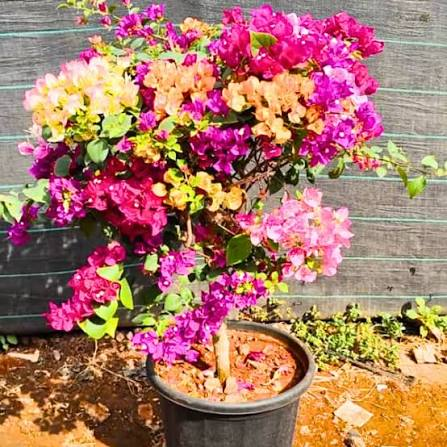
Multicolor bougainvillea is one of the most breathtaking visual statements you can add to a garden, patio, or landscape. Famous for its explosive bursts of vibrant, paper-thin bracts, this tropical climber offers a spectacular display by showcasing multiple distinct hues on a single plant. Whether you are aiming to create a vivid garden focal point, cover a sunny wall, or cultivate a striking potted centerpiece, multi-hued bougainvillea delivers unmatched color density with surprisingly minimal demands once established.
What Is Multicolor Bougainvillea?
Unlike wild single-color varieties, multicolor bougainvillea is typically created through specialized horticultural practices. The most common method involves grafting several distinct bougainvillea cultivars onto a single, hardy rootstock. Through careful grafting, branches that produce magenta, golden yellow, bright orange, snowy white, and deep purple flowers co-exist on a single specimen.
As the plant matures, the different grafted branches intermingle, creating a layered canopy that appears to bloom in a spectrum of shifting colors. Some unique cultivars also display natural color-shifting properties—where young bracts open in soft orange or yellow tones and gradually transition into pink, coral, or purple as they age.
The vibrant “flowers” of the bougainvillea are actually modified leaves known as bracts. The true flowers are tiny, cream-colored blossoms hidden inside these bold, colorful structures.
Why Choose Multi-Hued Bougainvillea for Your Garden?
Adding a multi-hued specimen to your outdoor space provides several unique landscape advantages:
- Unmatched Visual Depth: A multi-colored plant creates instant contrast and visual interest without needing to plant multiple separate shrubs.
- Long Blooming Cycles: In warm climates, bougainvillea can flower almost year-round, with peak displays occurring in late spring through summer.
- Drought Resilience: Once established, these plants thrive in hot, dry conditions where other ornamental flowers struggle.
- Versatile Growing Options: Multi-hued bougainvilleas thrive in ground plantings, large containers, hanging baskets, and trained along trellises or arbors.
How to Graft Your Own Multicolor Bougainvillea
While commercial nurseries sell pre-grafted multi-color plants, creating your own is a rewarding project for experienced gardeners. Grafting allows you to select your preferred color combinations and build a custom palette.
Essential Tools and Materials
- A healthy, mature parent bougainvillea plant to serve as the rootstock.
- Scions (healthy softwood stems, 3 to 5 inches long) from different bougainvillea varieties.
- A sharp, sanitized grafting knife or razor blade.
- Grafting tape or stretch film.
- Pruning shears.
Step-by-Step Grafting Process
- Select the Rootstock Branch: Choose a healthy, main stem on your base plant that receives full sunlight and is roughly the thickness of a pencil.
- Prepare the Scion: Cut a healthy stem from your target color variety. Strip away lower leaves and thorns, leaving one or two upper leaves intact.
- Make the Cuts: Perform a clean wedge cut at the bottom of the scion. On the rootstock branch, make a corresponding vertical slit down the center (cleft graft).
- Join the Graft: Insert the scion wedge into the rootstock split, ensuring the inner green layers (cambium) align closely for proper nutrient flow.
- Secure the Graft: Wrap the connection tightly with grafting tape to seal out moisture and airborne pathogens. Cover the scion loosely with a clear plastic bag to maintain high humidity around the graft site.
- Monitor Growth: Place the plant in bright, indirect light until new growth appears on the scion, indicating the graft has taken successfully.
Best Planting and Care Practices
To keep your colorful canopy blooming continuously, you must mimic the tropical conditions bougainvillea loves best.
Sunlight Requirements
Bougainvillea requires maximum sun exposure. Choose a location that receives at least six to eight hours of direct, unfiltered sun daily. Shade significantly reduces bract production, leading to sparse blooms and overgrown green foliage.
Soil and Drainage
Fast-draining soil is essential. Bougainvillea roots are sensitive to standing water and rot easily in soggy soil. Use a rich, gritty potting mix containing sand, perlite, and organic material, with a slightly acidic pH between 5.5 and 6.0.
Water Management
Overwatering is the primary cause of poor blooming. Allow the top two to three inches of soil to dry out completely between waterings. Deep, infrequent waterings encourage deep root development. Slight moisture stress often stimulates heavier flowering.
Nutrient Application
Feed your plant with a balanced, slow-release fertilizer enriched with micronutrients like iron, magnesium, and hibiscus-style potassium during the active growing season. Avoid high-nitrogen fertilizers, which promote leafy green growth at the expense of colorful bracts.
Pruning and Training Strategies
Pruning is essential for managing size, maintaining vibrant color distribution, and encouraging fresh blooms.
Timing Your Trimming
Pruning is best performed immediately after a blooming cycle finishes. Because bougainvillea produces flowers on new wood, trimming back old stems encourages fresh shoots that will carry the next flush of color.
Maintaining Graft Balance
When growing a multi-grafted specimen, monitor branch growth closely. Naturally vigorous color strains can outgrow weaker ones, potentially shading them out. Prune aggressive branches regularly to ensure every color graft receives equal light and nutrient access.
Shaping and Support
Because bougainvillea is a scrambling vine with sharp thorns, give it strong support structures like sturdy wood trellises, metal arbors, or stone walls. Fasten branches loosely with soft garden ties to guide growth along your desired layout.
Pest Control and Troubleshooting
Despite their rugged nature, these tropical climbers occasionally face growth issues.
Common Pests
- Bougainvillea Loopers: These small green caterpillars feed on leaves at night. Control them using natural sprays containing Bacillus thuringiensis (Bt).
- Aphids and Whiteflies: Target young shoots and leaf undersides. Treat light infestations with insecticidal soap or neem oil.
Resolving Bloom Loss
If your plant stops blooming, evaluate its light exposure, watering schedule, and fertilizer type. Ensure it receives full sun, reduce watering frequency, and eliminate excess nitrogen fertilizer.
Creative Landscape Ideas
- Grand Entrance Arches: Train a multi-colored vine over an entryway arch to create a colorful frame for visitors.
- Patio Container Trees: Prune your plant into a formal standard or tree shape in a decorative terracotta pot for portable color.
- Living Privacy Screens: Support vines on a boundary fence to build a dense, thorny, colorful barrier that doubles as natural garden security.