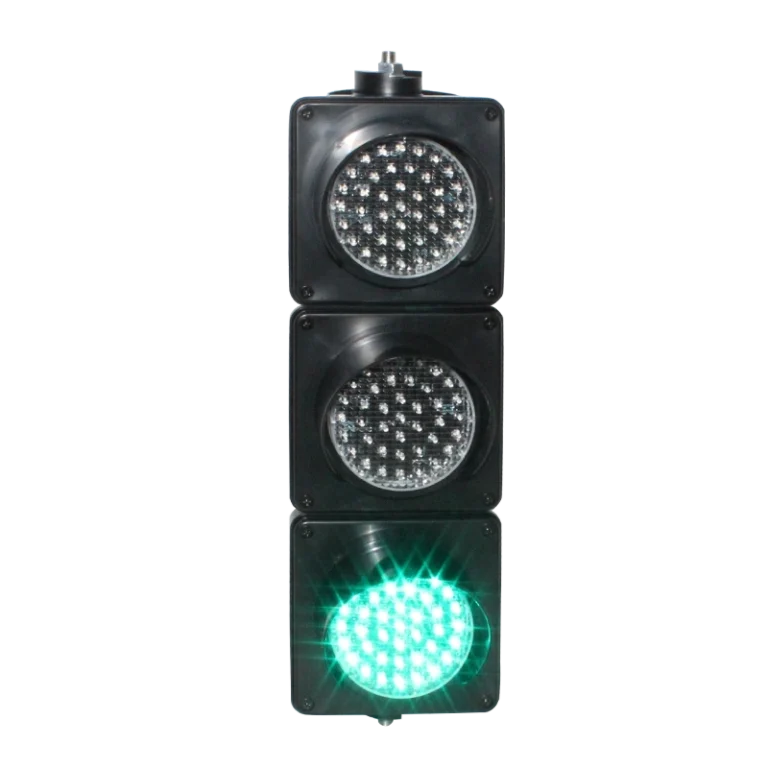
Mini traffic lights are compact versions of conventional traffic signal systems designed to manage movement in smaller spaces. While standard traffic lights are mainly installed at busy road intersections, mini traffic lights can be useful in parking areas, private roads, construction zones, educational facilities, model traffic systems, and other controlled environments.
Their small size makes them easy to install, operate, and integrate into different applications. They can also provide an effective way to demonstrate traffic management principles and improve safety where full-size traffic signals are unnecessary.
What Are Mini Traffic Lights?
Mini traffic lights are small traffic signal units that typically use the familiar red, yellow, and green light sequence. Depending on their purpose, they may be made from plastic, metal, or other durable materials.
These compact signals can be powered by batteries, low-voltage electrical systems, USB connections, solar panels, or other power sources. Some models operate automatically using timers or controllers, while others can be controlled manually or through sensors.
Although they are smaller than standard road traffic lights, their basic concept is similar: they communicate instructions visually to people, drivers, or participants in a controlled traffic environment.
How Do Mini Traffic Lights Work?
The operation of mini traffic lights depends on their design and intended application. A basic system uses three colored lights:
- Red: Stop or wait.
- Yellow: Prepare to stop or proceed with caution.
- Green: Proceed when it is safe.
An electronic controller determines when each light turns on and off. In simple systems, a timer controls the sequence automatically. More advanced systems can use sensors, programmable controllers, remote controls, or computer-based systems.
For example, a mini traffic light at a private parking entrance could remain green until a sensor detects another vehicle. The controller could then change the signal to yellow and subsequently red before allowing traffic from another direction.
Common Uses of Mini Traffic Lights
Mini traffic lights have many applications beyond ordinary roads. Their compact design makes them particularly useful where space is limited.
Parking Areas
Small traffic signals can help control vehicles entering and leaving parking facilities. They may be installed at narrow entrances, exits, ramps, or internal intersections.
Construction Sites
Temporary traffic management is important in construction areas. Mini signals can help coordinate vehicles or workers where traditional traffic-control equipment is not practical.
Schools and Educational Centers
Schools can use miniature traffic lights to teach children about road safety. Students can learn what different signal colors mean and practice safe crossing and driving behavior in controlled environments.
Model Roads and Projects
Mini traffic lights are popular in educational projects, model cities, robotics demonstrations, and engineering experiments. They allow students to understand how traffic signal systems operate.
Private Roads and Facilities
Factories, warehouses, residential communities, and private properties may use compact signals to organize vehicle movement in restricted areas.
Benefits of Mini Traffic Lights
One of the biggest advantages of mini traffic lights is their compact size. They can be installed in locations where a full-sized traffic signal would be unnecessary or impractical.
Other benefits include:
- Space-saving design: They require less installation space.
- Easy visibility: The familiar red, yellow, and green colors are easy to understand.
- Flexible installation: Many models can be mounted on poles, walls, stands, or other surfaces.
- Low power consumption: LED-based models generally require relatively little electricity.
- Educational value: They are useful for teaching traffic rules and electronics.
- Programmable operation: Some systems allow users to customize timing sequences.
- Portable options: Battery-powered models can be moved between locations.
LED Mini Traffic Lights
Many modern mini traffic lights use LED technology. LEDs are popular because they can produce bright light while consuming relatively little energy.
LED signals can also have a long operating life compared with traditional incandescent bulbs. This can reduce maintenance requirements, particularly when the signal is used frequently.
Different LED colors can be combined into a single compact housing. Some products also offer adjustable brightness, flashing modes, or programmable sequences.
Mini Traffic Lights for Educational Projects
Mini traffic lights are particularly useful for students learning about electronics, programming, robotics, and automation.
A basic school project can connect three LEDs to a microcontroller. The program can turn the red, yellow, and green LEDs on and off according to a predefined sequence.
More advanced projects can add:
- Ultrasonic sensors
- Infrared sensors
- Push buttons
- Microcontrollers
- Displays
- Buzzers
- Remote controls
- Pedestrian crossing buttons
These additions can demonstrate how real-world traffic systems combine hardware, software, and sensors.
Choosing the Right Mini Traffic Lights
When selecting mini traffic lights, consider the environment and purpose of the installation.
First, determine the size required. A model intended for a classroom project may be very small, while a signal used in a parking facility needs to be visible from a greater distance.
Next, consider the power source. Battery-powered units are convenient for portable applications, whereas wired systems may be more suitable for permanent installations.
The material and construction are also important. Indoor educational projects can use lightweight models, while outdoor applications may require weather-resistant housing.
You should also check whether the system provides automatic timing, manual control, sensors, or programmable features.
Installation and Maintenance
Proper installation helps ensure that mini traffic lights remain visible and function correctly. Signals should be positioned where the intended users can easily see them.
For outdoor applications, protection from rain, dust, sunlight, and temperature changes should be considered. Electrical connections should also be properly insulated and protected.
Routine maintenance may include cleaning the signal lenses, checking wiring, testing the controller, replacing batteries when necessary, and ensuring that all three lights operate correctly.
Mini Traffic Lights and Smart Technology
Modern mini traffic lights can be integrated with smart control systems. Sensors and microcontrollers can make the signals respond to changing conditions rather than simply following a fixed timer.
For example, a smart miniature intersection could detect vehicles approaching from different directions and adjust signal timing accordingly.
This makes mini traffic lights useful in robotics competitions, smart-city demonstrations, automation projects, and technology classrooms.
Safety Considerations
Mini traffic lights should be used according to their intended purpose. A small signal designed for education or a private property should not automatically be treated as an official road traffic-control device.
When installing a signal near vehicles or pedestrians, visibility, electrical safety, mounting stability, and appropriate signal timing should be considered.
For public roads, traffic-control equipment generally needs to comply with the applicable local regulations and standards.
Conclusion
Mini traffic lights provide a practical and versatile way to manage small-scale traffic situations while also serving as valuable educational and technology tools. Their compact design, recognizable signal colors, low-power LED options, and programmable features make them suitable for parking areas, private facilities, schools, construction environments, model roads, and robotics projects.
Whether used to teach children about road safety or to demonstrate automated traffic control, mini traffic lights show how a simple red-yellow-green system can be adapted to many different environments. As sensor technology and automation continue to develop, these compact systems can also become increasingly sophisticated and interactive.